
WEDNESDAY, NOVEMBER 5, 2025


Marjorie's Dead
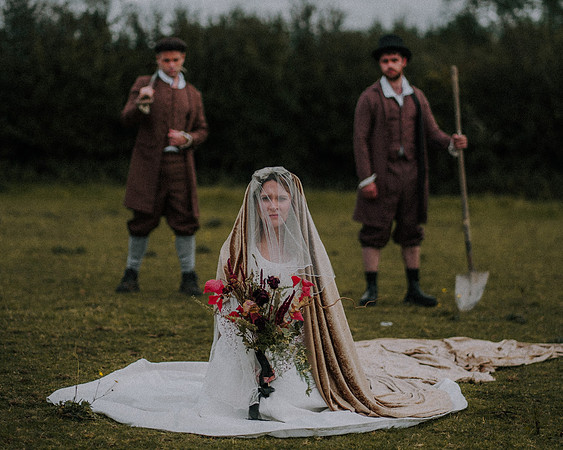 Photo courtesy of Dark Forest Theatre
Chilling, humane and eclectic, Nathan Martin's Marjorie's Dead is a blend of the historical and the macabre that leaves an indisputably strong impression on its viewers. It is an acting and writing showcase from Martin's Dark Forest Theatre that also finds a way to merge the popularly cultural with the fascinatingly legendary, and does so most strikingly – the audience, to me, are likely to be as spellbound by the story told as the central performance from Annina Watton, an actress who seems to get better with every role, as the titular Marjorie.
"Excited, tonight, to hear about how I died?" These are the unsettling yet curiously fascinating words of Watton's Marjorie McCall. Based in eighteenth century Ireland, she is the wife of Lurgan doctor John McCall, who was portrayed by Matthew O'Leary in the production I saw at Belfast's Cultúrlann McAdam Ó Fiaich earlier this year but will be played by Tiarnán McCarron in the forthcoming November staging at the city's Grand Opera House Studio. Anyway... Legend has it that after Marjorie was buried in Lurgan's Shankill Graveyard, she came back to life when a pair of grave robbers crept into the cemetery and attempted to pilfer her beautiful and valuable wedding ring by removing her swollen finger. Yikes.
What we see are elements of the "before", the "during" and the "after" of this incident – namely, what is central to John & Marjorie's marriage, the gravediggers' actions, and what happened next. Writer-director Martin, who also does acting duty as one of the gravediggers and Marjorie's brother, structures the script in a way that allows for Marjorie to act as what I would call an "interludian" - someone who confesses their personal truths to us in the form of anecdotes and stories which act as interludes from the main narrative. It is a commendable approach that inspires stunningly expressive work from the terrific Watton and impressive acting from her co-stars. Watton's gentle passion seems not to set out towards betraying vulnerability but to instead expose the numerous facets in literal and family sentiment along with the burden of concealed realities. Breaking the fourth wall to us is also a break, for Marjorie, from the "real world" – to a view where there are no consequences, no limitations, and no end of room for open emotion. Which is ideal for this play.
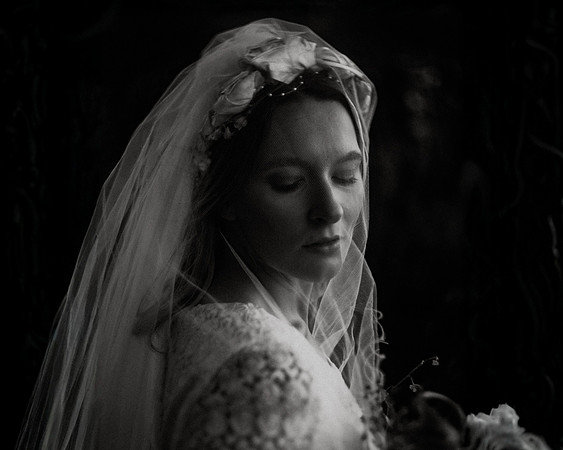
Photo courtesy of Dark Forest Theatre
Martin's depiction of John & Marjorie's marriage is clear about the entrenched feel of control and helplessness on either side. There is an instance of John being overly theoretical about one of his passions with Marjorie where one gets sad echoes of Friends' Ross and Rachel – in other words, what happens when a patriarchal limitation is shown up, which in this case turns out to be a woman's words not being valued as much as the words, lifestyle and knowledge which her man appears to own? Therefore, what Marjorie and John have ceases to be a romantic relationship and instead becomes an exploration of a power dynamic. There is also a lack of empathy in any kind of appreciation that John may show for Marjorie's storytelling to him, a very affecting coldness. It's applause for reassurance's sake, comfort for appearance, a token exchange that one party seems to think the other party should just be grateful for, when the former really should think about how they're treating the latter and the latter shouldn’t be expected to simply accept the status quo. One could also say John is like Edgar from Men In Black, repeatedly chastising his wife before a combustible intervention that only makes the truth more obvious. It's apparent, from Watton as much as Marjorie's backstory, that Marjorie thought she married a prince but he's really only a pest to her now, akin to the giant cockroach which had frankly kind of already represented Edgar before the alien unconvincingly hid under his skin. These marriages, they have rot at their core, intentional or otherwise - excellence in Martin's work, like similar excellence in Barry Sonnenfeld's 1997 film, comes from just how he and the cast delve into this.
While Marjorie's Dead is deeply theoretical and highly questioning as well as being comedic and captivating, it is a reflective piece from the point-of-view of unreliable narration, and therefore it is only natural for momentary doubts and sudden revelations to arise in the story. There's so much for an audience to engage with, both in the theatre and out of it - yet for all the strengths I've mentioned, perhaps what endures most is the sense that genuine affirmation and truthful appreciation mean so much more than apathy. It might be that Marjorie's Dead is about something as simple as the need for recognition and the fear of ignorance – the very things which drive the heart and soul of an artist and a poet. An inclination towards repeated contextual justification of one's actions and one's situation without full satisfaction. Aspects of what drive Marjorie may well drive us all, and that is, quite possibly, the beauty of it.
Simon Fallaha
Marjorie's Dead runs in the Studio at the Grand Opera House, Belfast, from Thursday November 6 to Saturday November 8. For more information, and tickets, click here.